Inktober – What An Eye Opener?!

I have spent several very happy Novembers immersed in the joys of NaNoWriMo (National Novel Writing Month), challenging myself to write fifty thousand words of an original novel in thirty days. I love the challenge and often overshoot, losing myself in the story that pours through my keyboard. If you’re wondering, I use a screen reader which reads the contents of the screen out to me as I write. I have also spent more than a few useless hours writing complete gibberish, shopping lists and detailing my own frustration at the lack of wordage. After about six months of drawing I heard about Inktober – a similar challenge for artists, drawing a sketch each day in response to a single word prompt – and, of course, I couldn’t resist.

Up to this point I had been nervous about using ink. The thought of making a permanent mark on the page was a bit daunting, which is a bit crazy because I can’t actually see well enough to go back to a point on the page and remove or correct an ‘error’ – I don’t actually believe in ‘errors’, just happy accidents and learning opportunities. I decided to allow myself up to about twenty minutes to draw my response, and go with whatever came into my head first, no matter how difficult I thought it might be, or how unfamiliar I was with the subject.

Some days I drew more than one sketch, some days I surprised myself with images I really loved, often I threw out something a bit scrappy and called it done. Always I woke with the joy of anticipation and itching to sit down and draw – which, in itself, was something of a revelation. I shared each drawing with my FaceBook friends and was often surprised and pleased by the response.

Making a Start.

Letting friends know I was doing Inktober was a great way of making myself stick to the task in the early days, when the results were far from pleasing. I was learning so much about thinking before I put ink to paper, and then setting about the task with clear purpose and confidence. I really do think that my inability to see the detail of what I’m drawing helps me to let go of the urge to get everything perfect, and leads to my drawing from the heart and then intent, rather than from a focus on the page itself. Does that sound a bit woo? Well, perhaps it is. Nothing wrong with tuning in to the feelings and intent and letting go of the visuals. give it a try, you might surprise yourself.

I spent part of October staying with my Mum in the village where I grew up, enjoying old familiar walks. As I walked I thought of an artist I once knew who painted that particular landscape in a way that spoke to my heart, capturing the feel of the place as I knew it. I suddenly felt why his work struck such a chord for me, and there was a huge moment of realisation and learning for me. The whole idea that drawing and painting has far more to do with getting a feeling on to the page than it has with getting a realistic representation of something or somewhere. This may seem obvious to some, but I had always thought that what I was reaching for was something that looked like the original. Now what the heck is the point of that? That is partly what photography is for, isn’t it? Having been a very keen photographer while I could still see to enjoy it, – and, yes, I had an artsy fartsy phase in that too – I knew how one could achieve wonderful images with the camera and some fancy software (or even good old physical filters back in my day). This whole drawing thing is about something altogether different and more personal. From that moment the risk taking grew, the confidence grew, and the images began to improve.

The Takeaways.

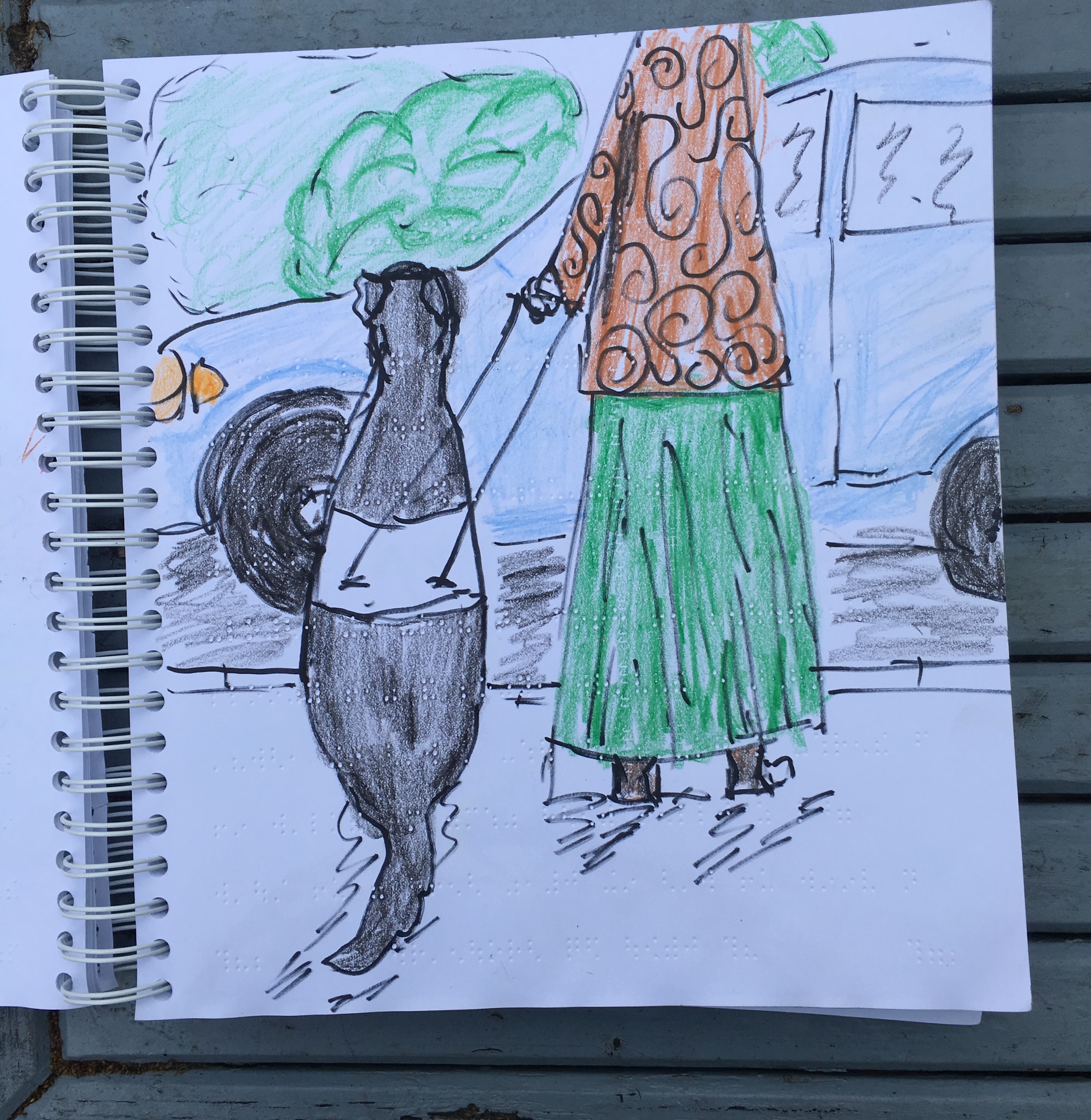
I was so bowled over by some off the responses to my drawings during this month, with people likening some of them to the work of John Lennon (which I had not been aware of) and Quentin Blake! It all spurred me on to keep drawing and trusting to my own emerging style.
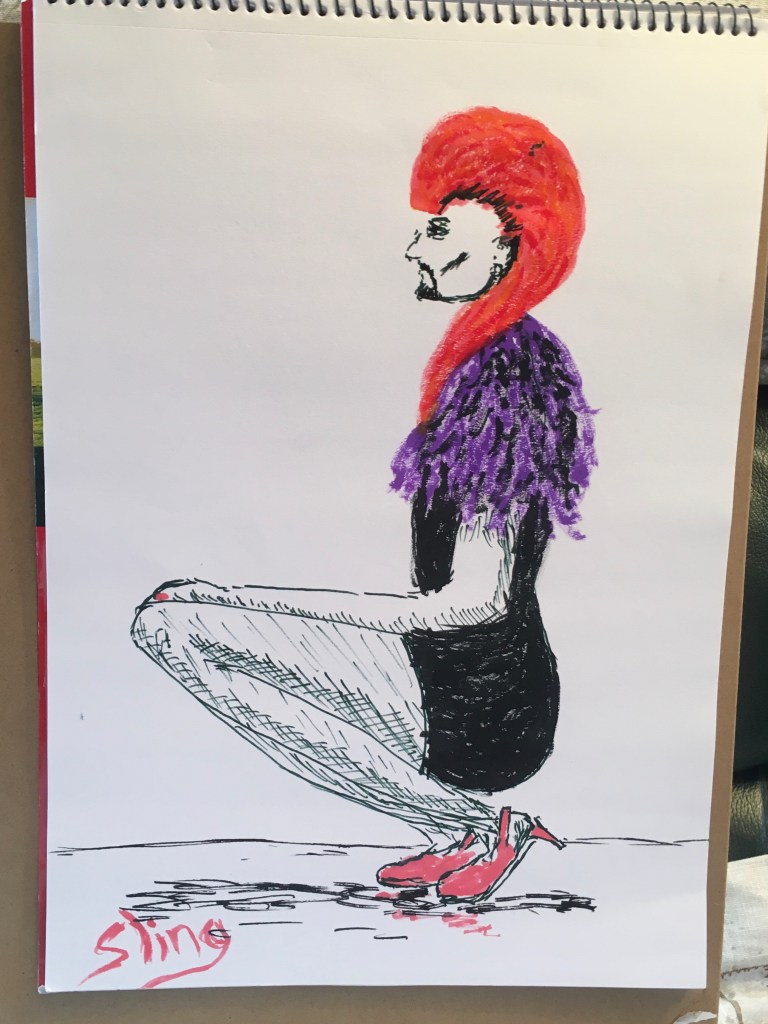
I also gained a lot of confidence simply from posting as part of the Inktober community. I followed a few others who were doing it too, and some of them are seriously excellent artists. Just making the decision to see myself in and be active in such company was a huge boost to my self esteem as an artist. There are so many life lessons to be drawn from all this – perhaps that’ll be another post some day.
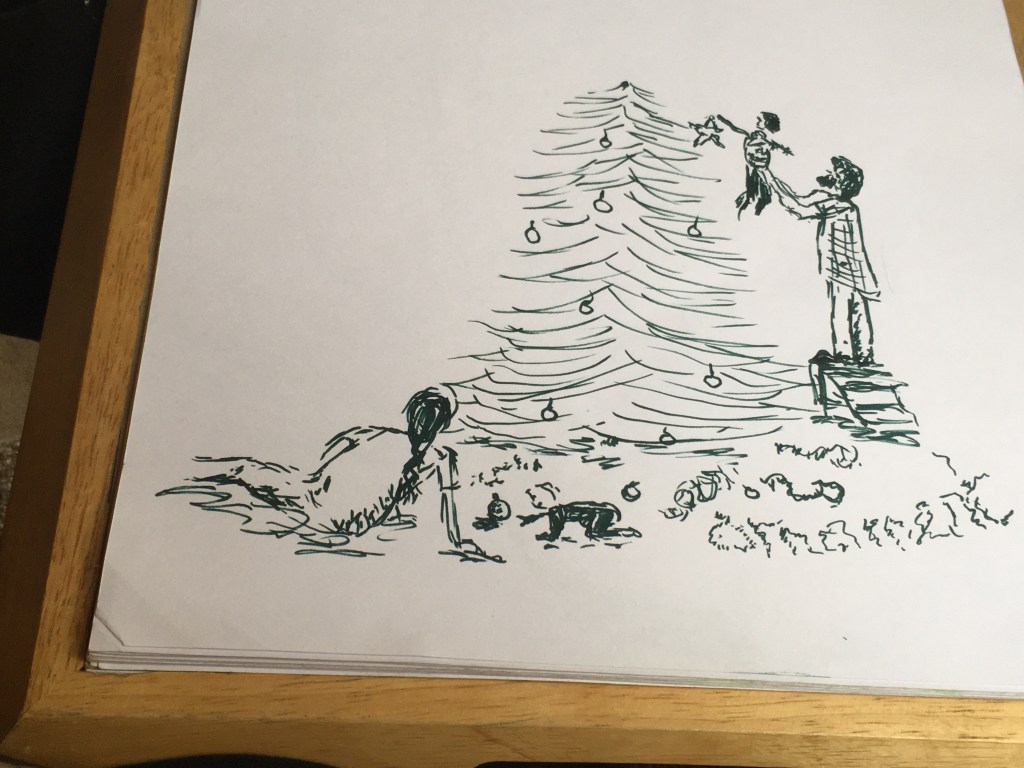
If you’d like to see more of the Inktober 2019 images you’ll find them in the Gallery here. And I’m now posting images to my Splinteredeye account on Instagram at https://www.instagram.com/p/CClcA9sDznp/?igshid=1xeccm6j8ir3j

Next time more musings on the differences I imagine there may be between my way of working and that of someone who can see what they are doing, and maybe a bit about my use of different materials.

Piratical Drawing and Why It’s Such a Bad Idea.

I set out with the intention of posting absolutely everything I drew. It is just as well I failed to do so, because there are hundreds of drawings now, over a year on from the beginning of this endeavour. In this post I will tell you how I was working, and why I had to change in order to protect my remaining eyesight. I’ll get into the drawings and materials and exercises at a later date.

How To Draw With Broken Eyes.

I am registered ‘severely sight impaired’, which here in the UK is the highest level of impairment we register. It covers people who have no sight at all, and those like me, who have lost a significant amount, but still have some residual sight.

I have always been extremely short sighted, which is what lead to my permanent sight loss, the degree of stretching in my retina eventually causing tiny haemorrhages which destroyed the central part of my retina, the macular, which is where we detect most detail and which is the bit right in front as you look straight ahead.

Because I am short sighted I wear strong contact lenses to correct the remaining sight I do have, without my lenses in I can hold something about five or six inches from my eyes and see it in focus, and at this distance, somehow the loss of central sight has less of an impact on what I am seeing.

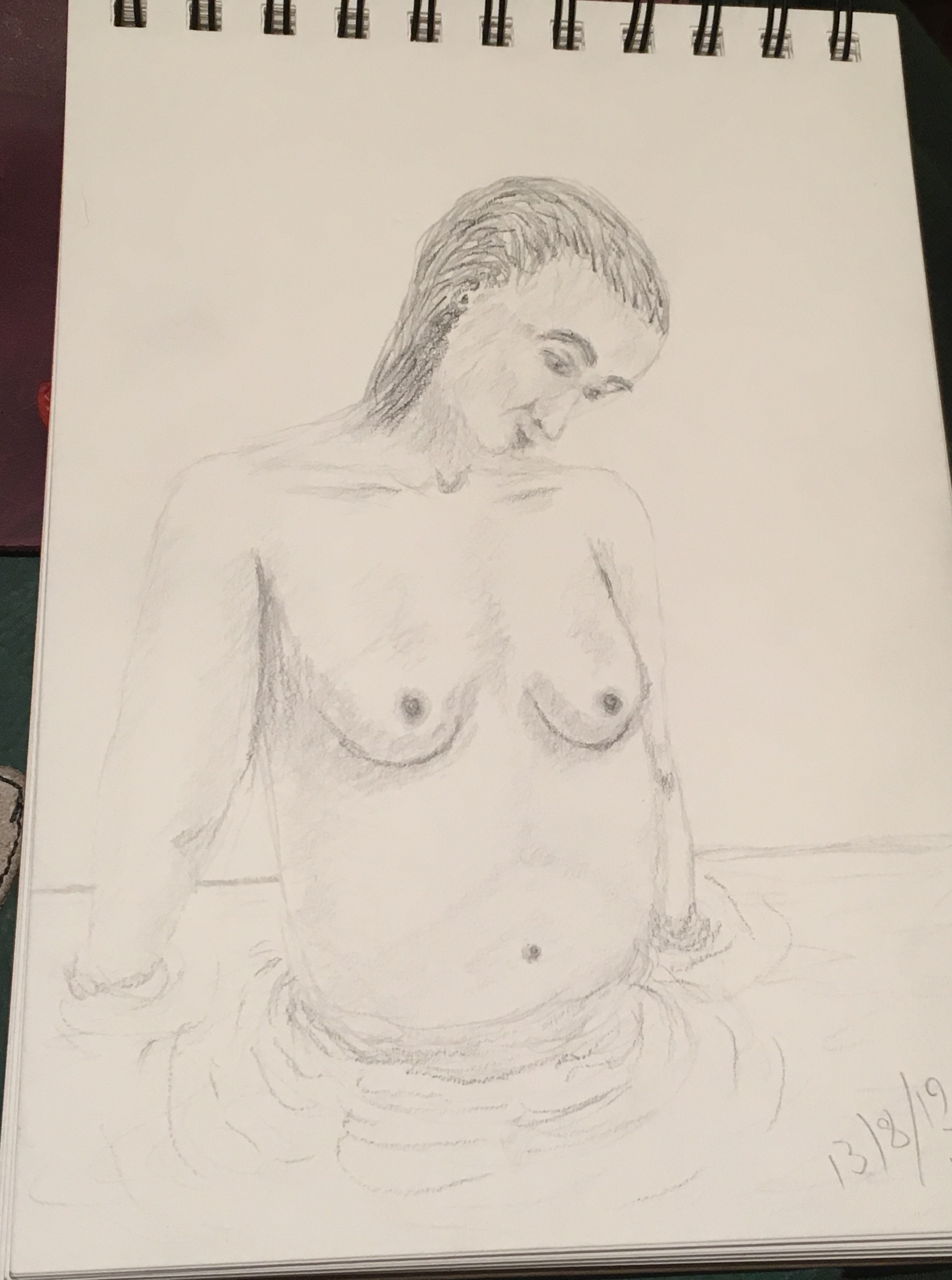
So I started drawing without my lenses in, with the page just a few inches from my nose, and my shoulders scrunched up over the page. Because it is so difficult to work with binocular vision at this close range, especially when the two eyes have differently damaged views, I would work with only my left eye which has slightly less sight loss, so I would wear an eye patch, or just screw up my face to keep that eye closed while working. Yes, I did shrug off anyone who commented and suggested I might not be doing my sight much good. I did try a little with lenses in, and found that I couldn’t see a pencil line very easily and I couldn’t get nearly so much detail into the drawings.

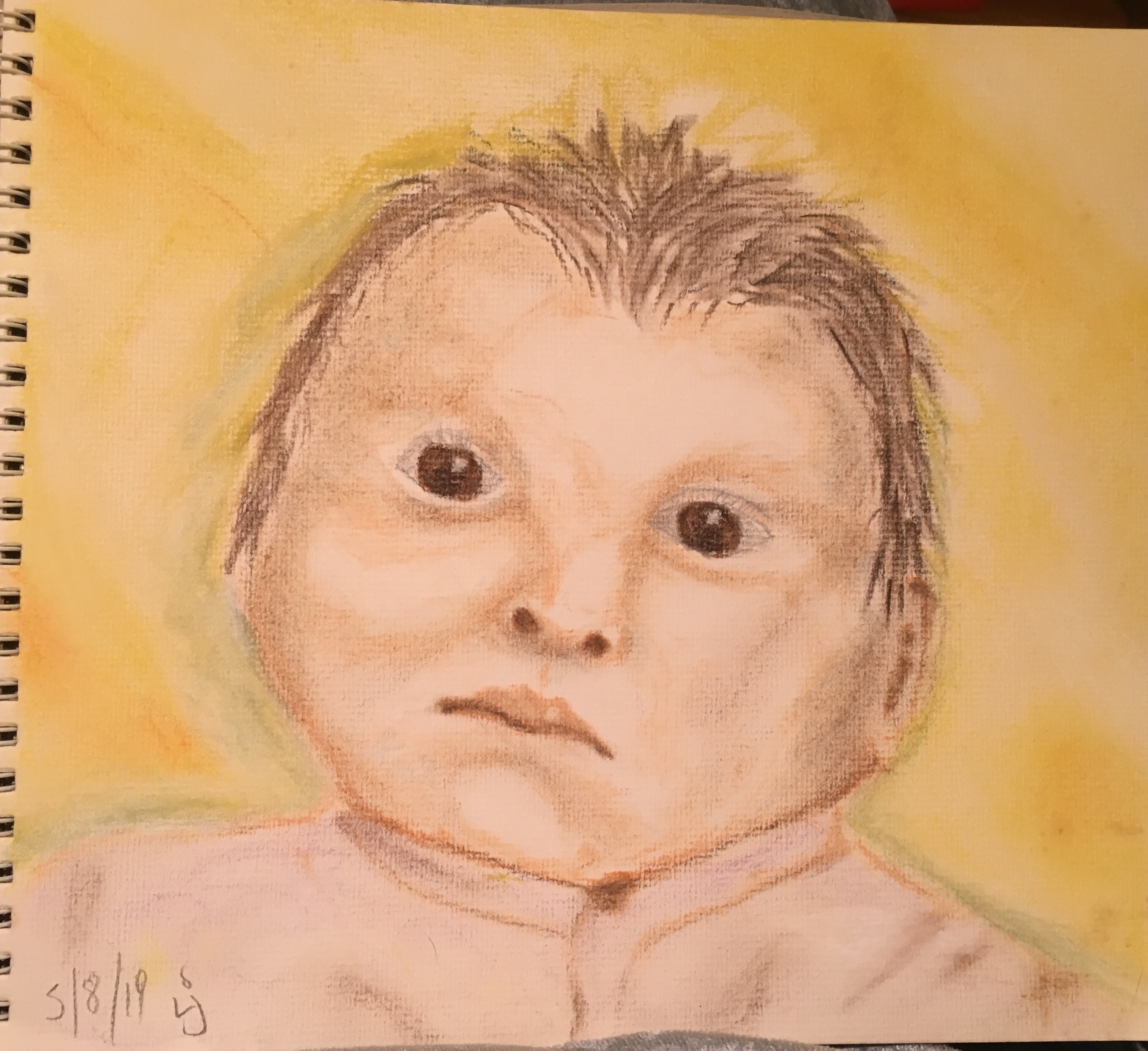
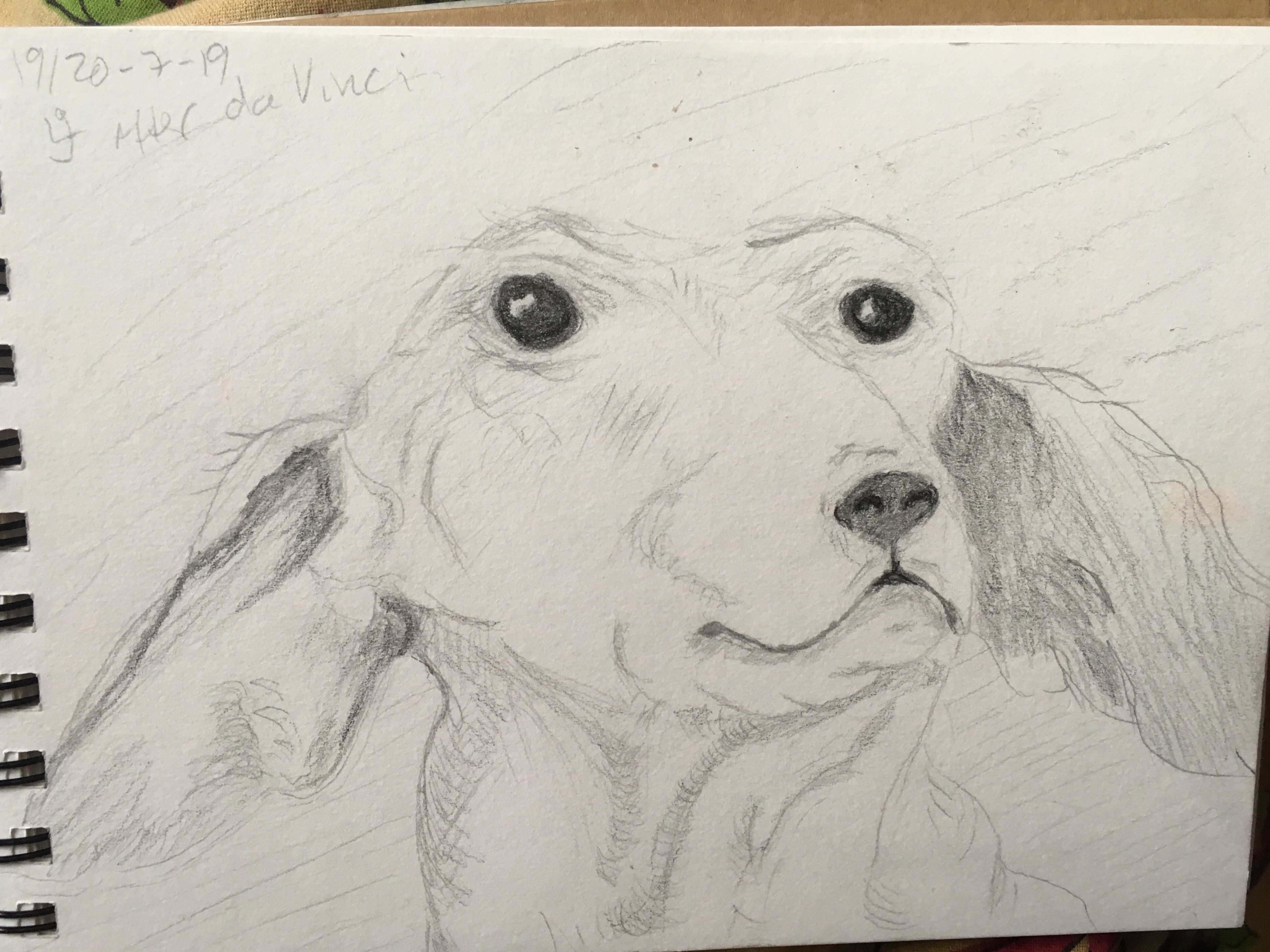
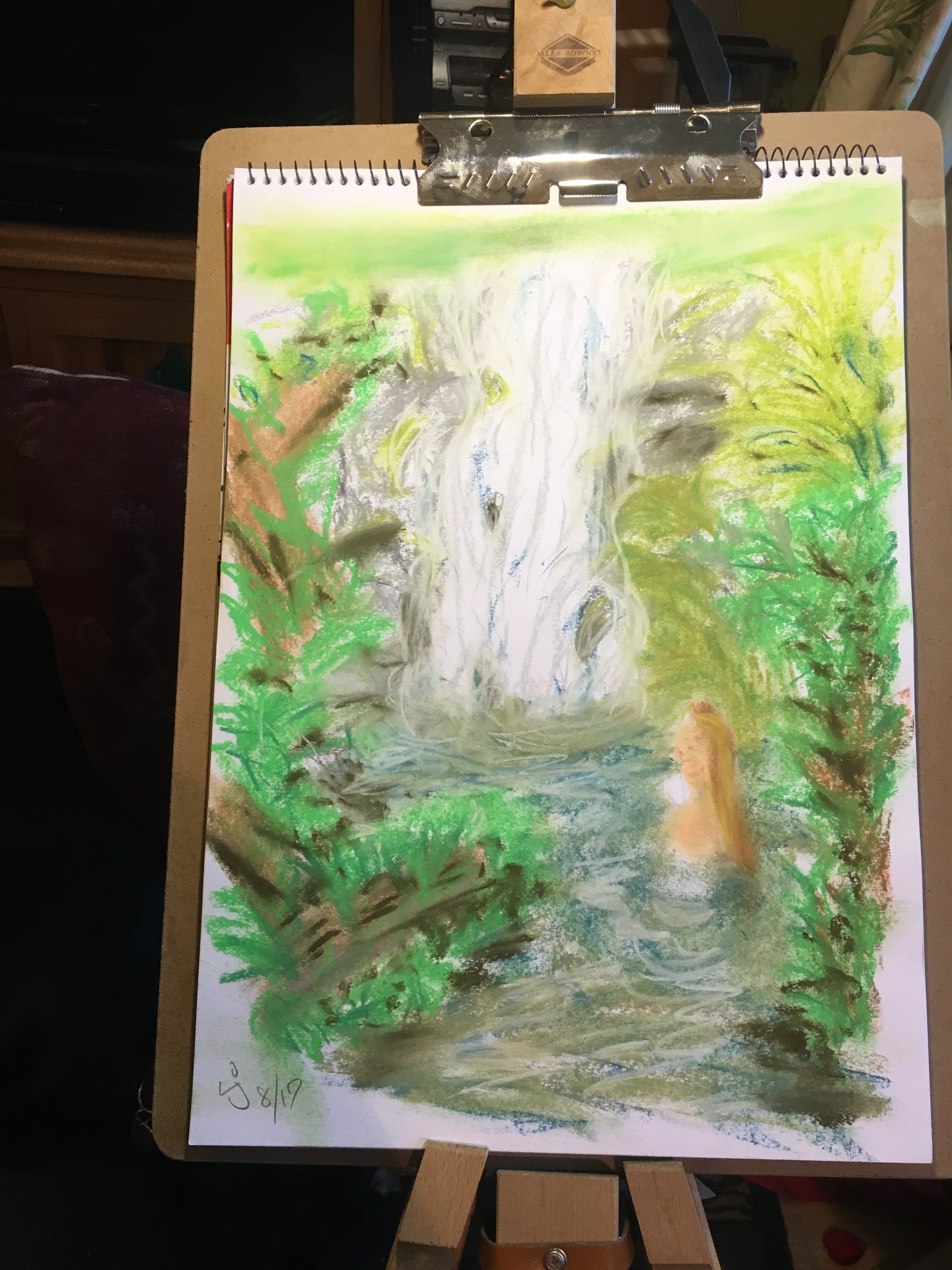
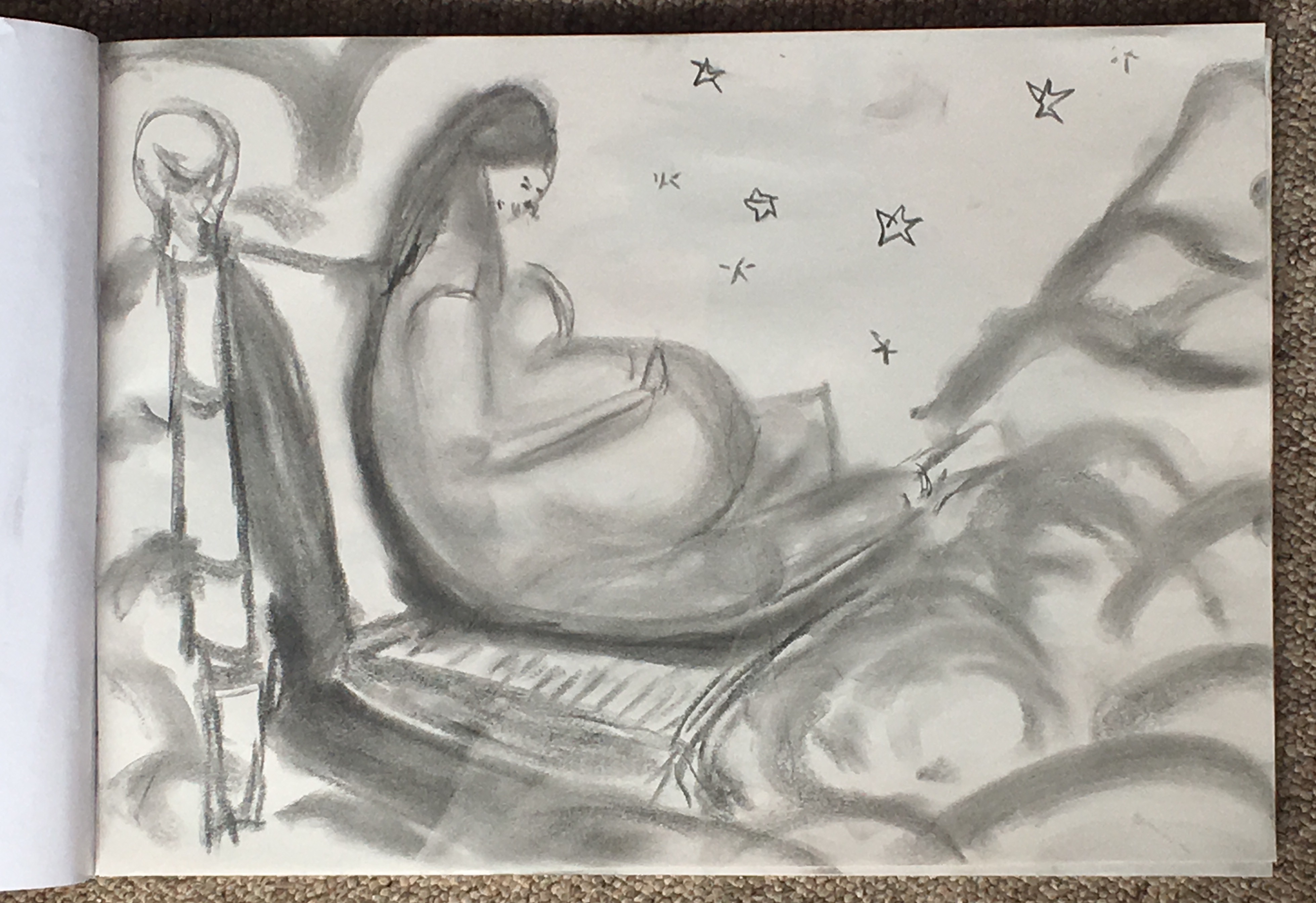
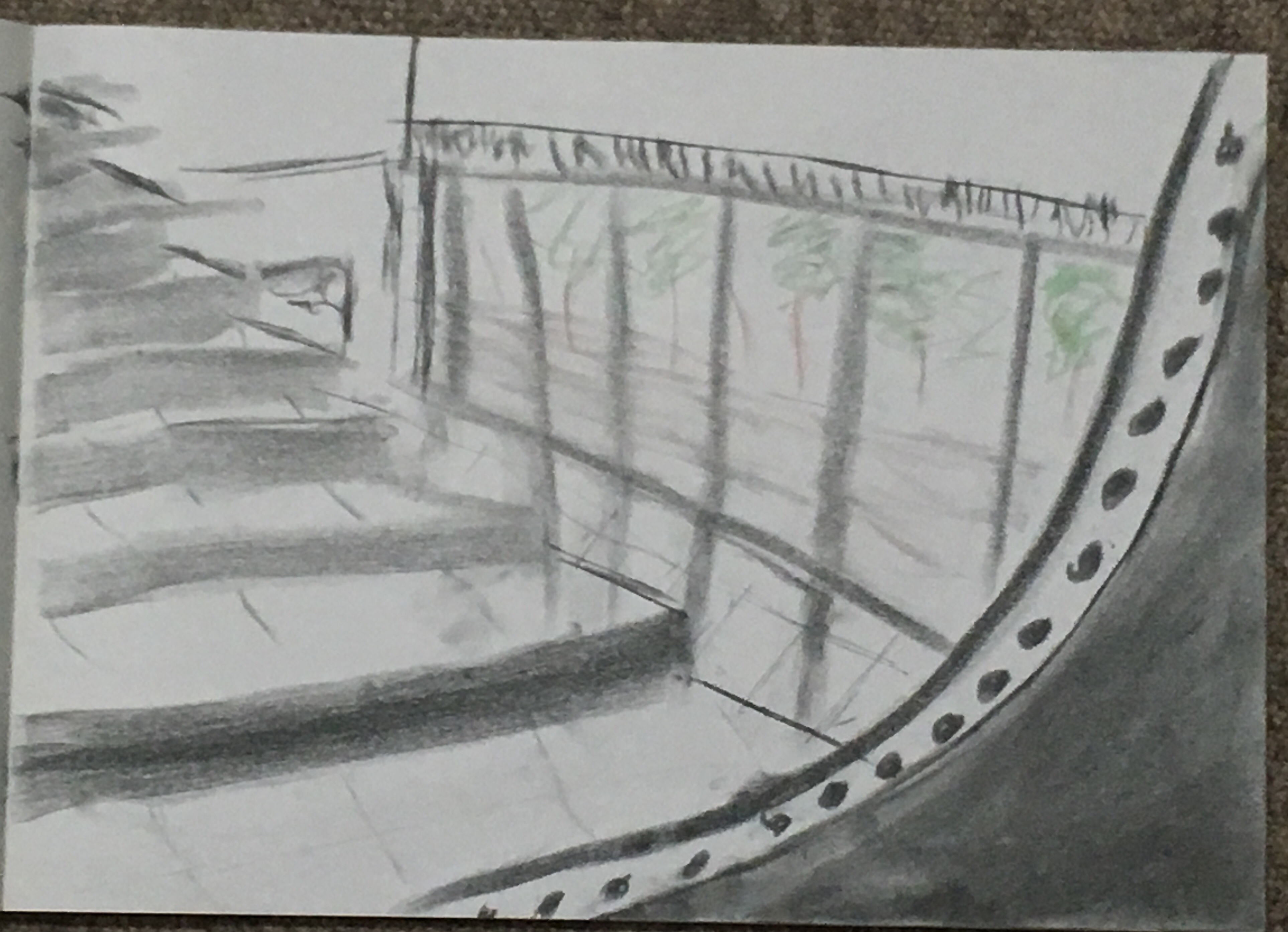
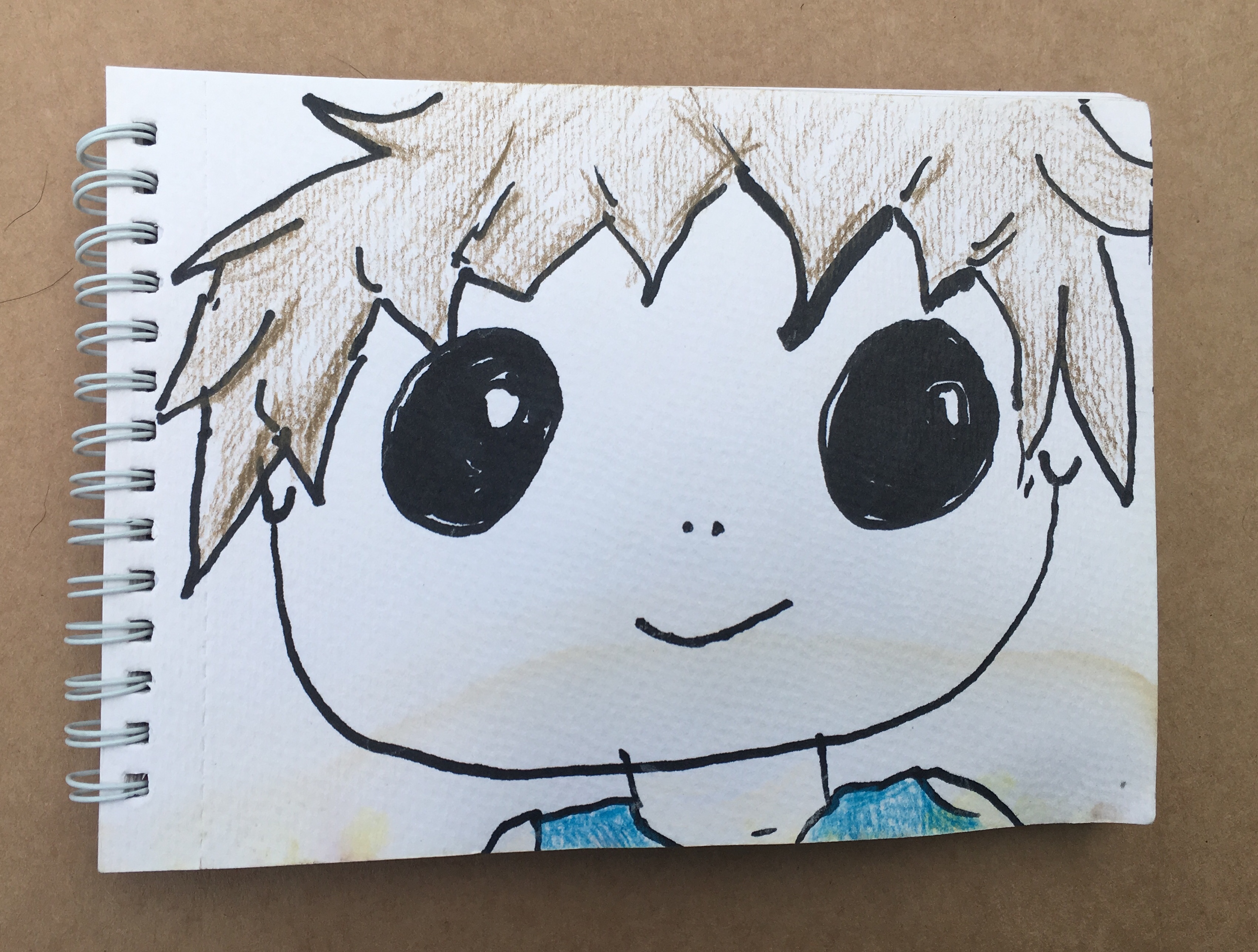
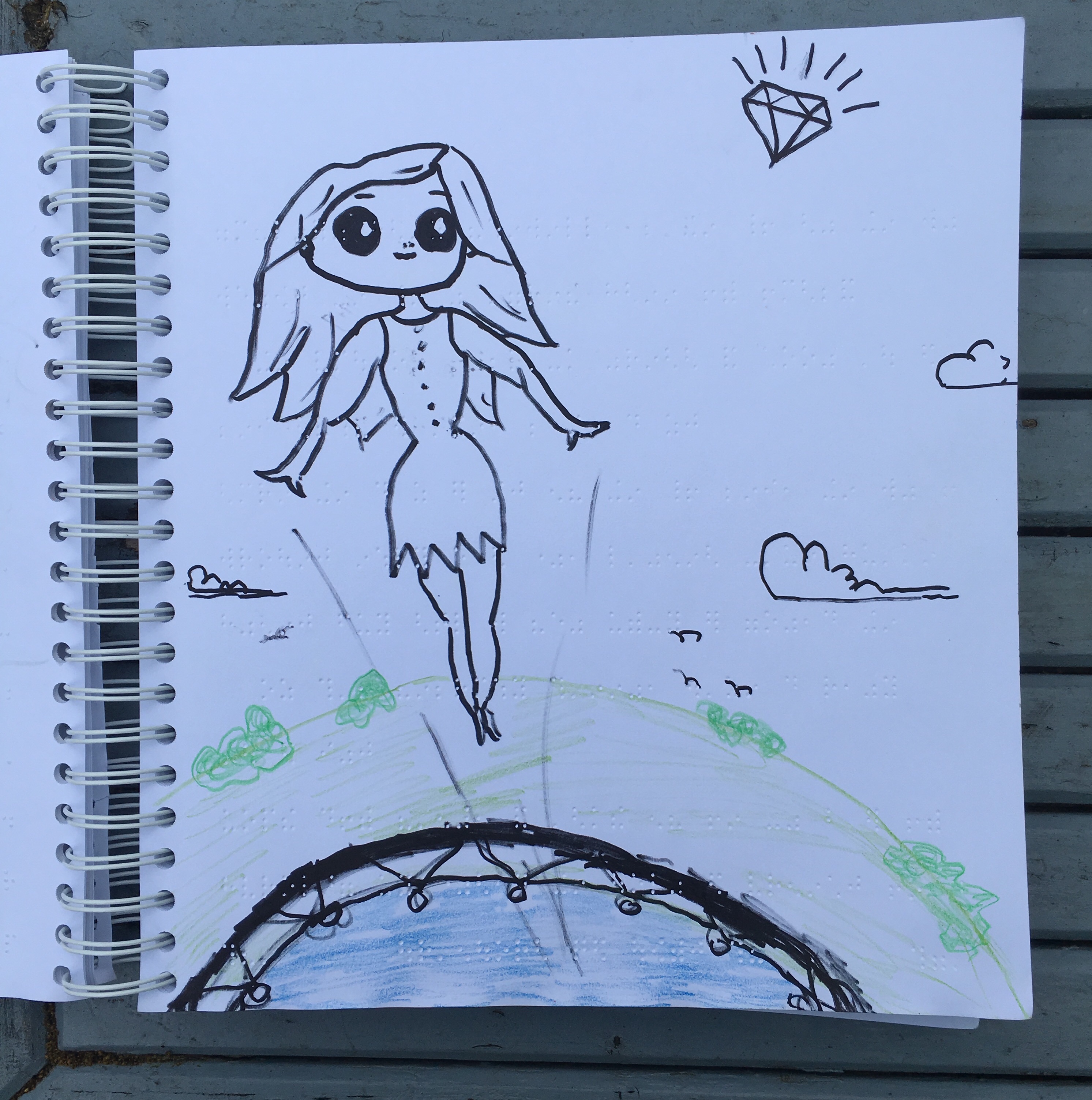
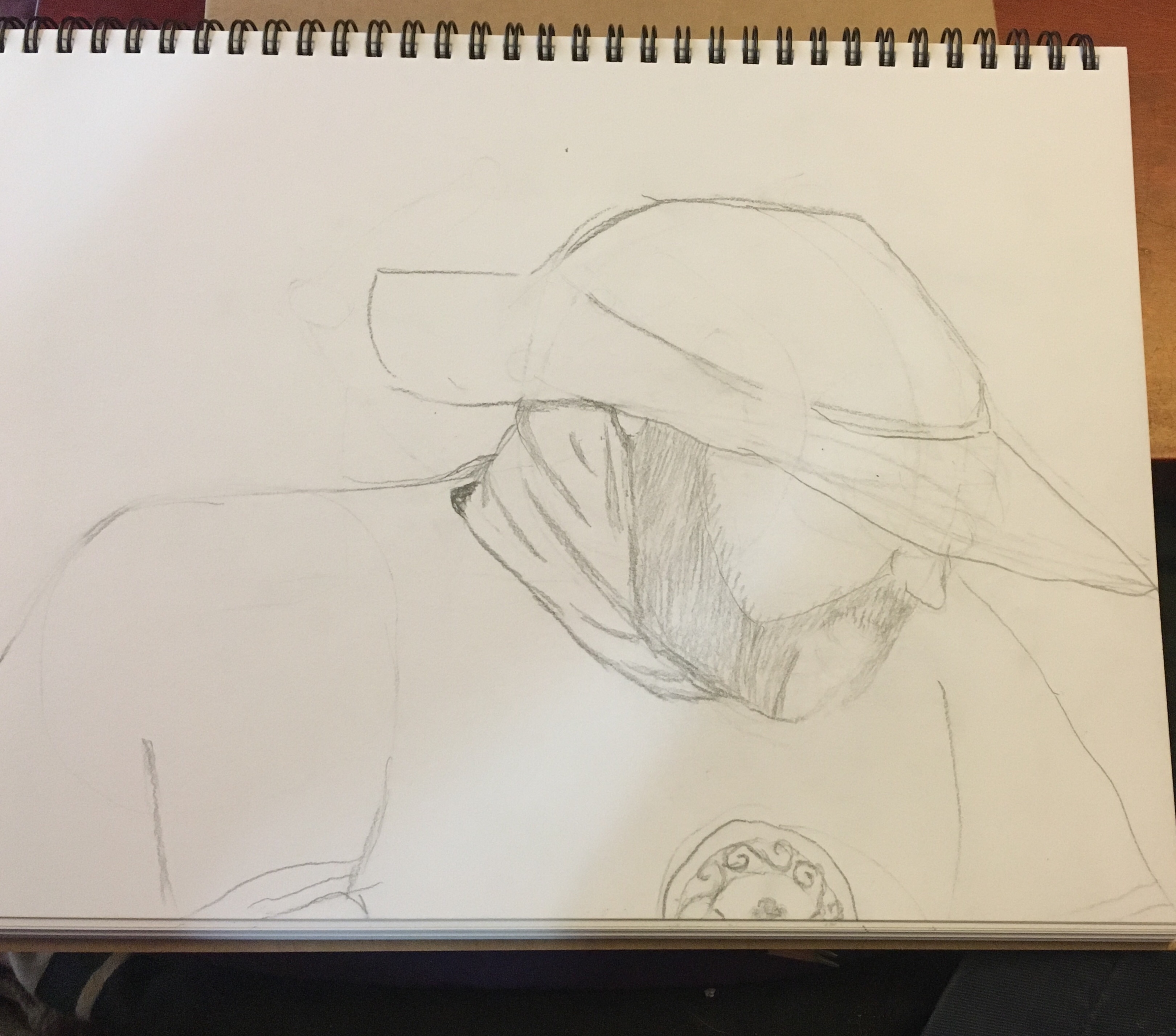
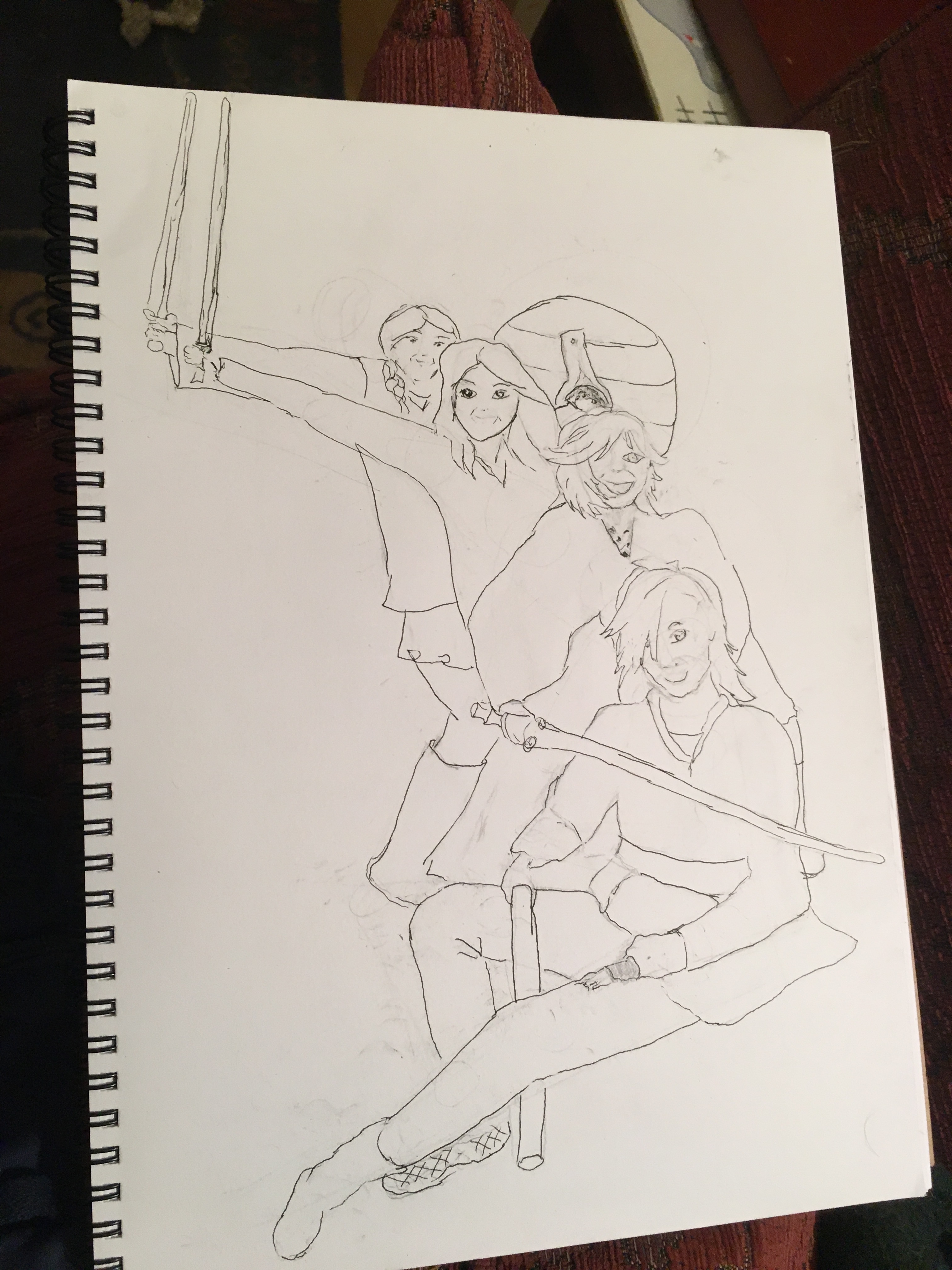
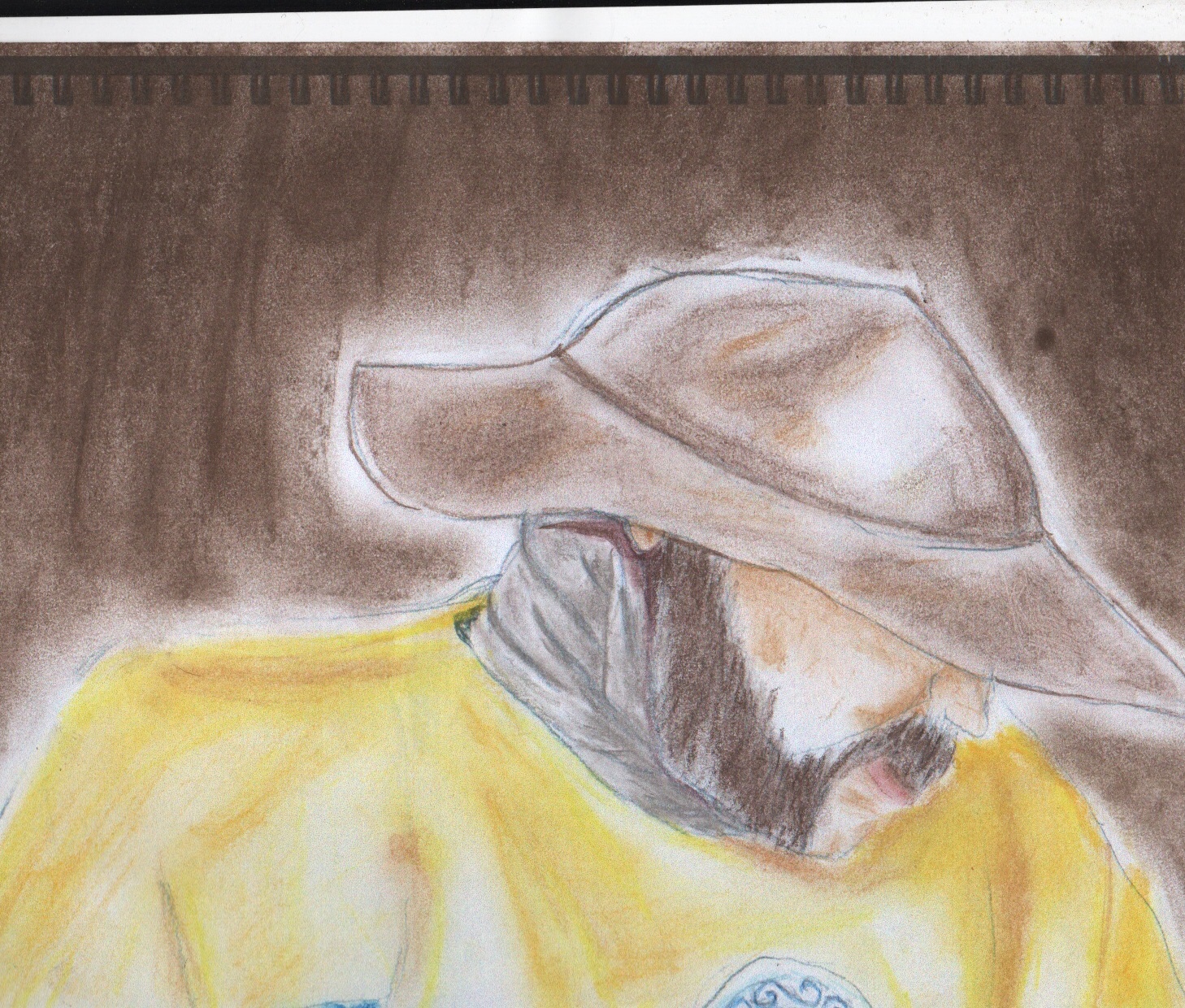
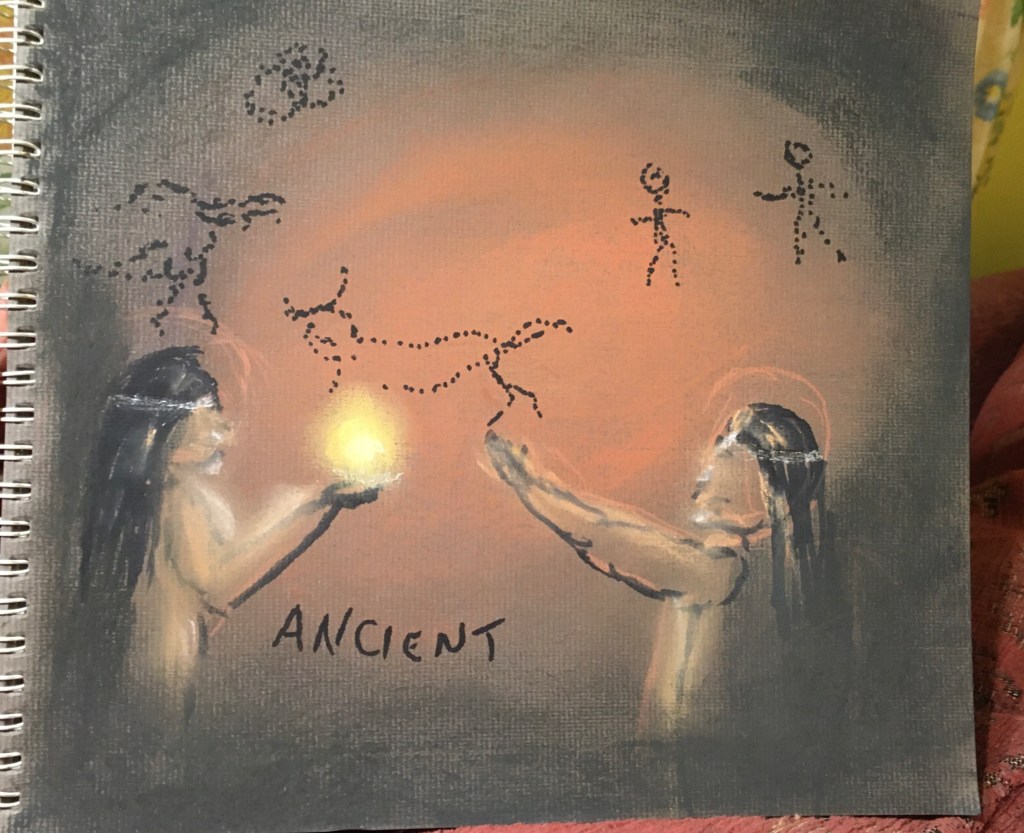
These were all drawn with lenses out.

And these with lenses in.

I have only shared images from last summer in this post , to give an idea

of the difference in the type of work I can produce with and without lenses.

Damage Done.

After about three months of working this way, I had a routine check up with the optician. I had felt that my sight was worsening a little, but couldn’t put my finger on what the change was, apart from noticing that my left eye would refuse to focus sometimes when I was tired. I would blink and blink and eventually have to focus on something close at hand for a minute to get things back in line. I could actually feel my brain struggling with telling my eye what to do. You may wonder why on earth I persisted with the drawing under these conditions. There is a whole other post to be written about sight loss itself, how what you have become used to can suddenly slip out from under you with another shift in sight levels, how determined (if not stubborn and bloody minded) one becomes to keep on keeping on regardless. After twenty plus years of this I have tended to think that my sight will do what it will do, and I will do the best I can with what I have. It never really occured to me that my actions might make matters worse.

By the end of the consultation we had confirmed that each eye was still seeing with the same acuity as it had been a year previously, but the double vision was being caused by the muscles in my two eyes not working at the same strength. I asked if spending a lot of hours working using only one eye could possibly cause this problem and my optician practically threw her hands up in horror. She asked what I had been doing and I came clean. She told me that working like that would definitely cause the symptoms I was experiencing, and the longer I did it the worse things would get. She said I might find that the muscles would sort themselves out if I stopped doing that, but there was no guarantee that they would ever get back in synch. So I was effectively giving myself double vision for anything more than a few inches away from my nose. I had to stop working that way immediately and hope that there might be some recovery.

Going In with Both Eyes Open.

I had to forget about detail and reaching for realism to a great extent, so I got rid of the eye patch, found some larger drawing pads, and ploughed on. The rest of last summer was spent finding out what I could achieve with my lenses in and both eyes open and with different materials. I wandered through pastel pencils, soft pastels and chalks, charcoal and graphite sticks. I worked on different coloured paper, exploring negative ideas and absences as opposed to presences. All very interesting and rewarding. I actually prefer not working to detail and extreme realism, and I constantly surprise myself. I have made a point of sharing my doodles with friends on social media, feeling that being open with every effort and mistake will make me more confident about sharing things I think might have worked.
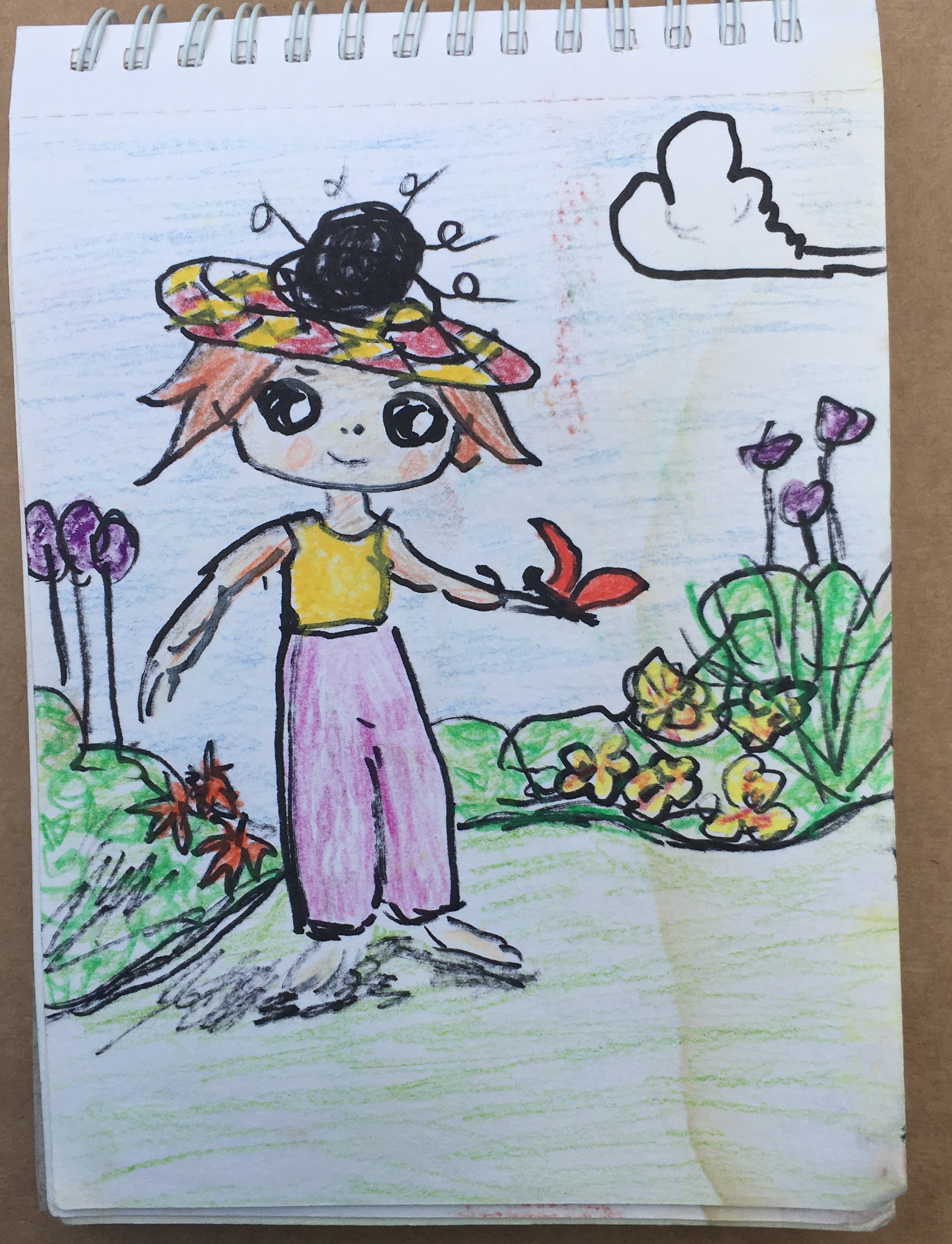
In recent months I have tried working with ink and acrylic paint pens, and oil pastels , and have been working on the draft sketches for those books that got me started on all this. . And I am itching to get started with some acrylic paint.

Last October I heard of a thing called Inktober, a personal challenge to draws something in response to a given prompt every day for a month. I thought I’d have a go at the first one, and I very quickly became hooked on the process, sharing each drawing with FaceBook friends, and coming up with some stuff I was very happy with. Because I can’t see what I’ve done very well, I try not to have to go back to rework parts of an image, and I set myself the challenge to draw each one in no more than about twenty minutes. The result is that I probably leap in a take risks far more readily than I would if I had full sight, and I have to make confident marks on the page from the outset. There are times when I sit and look at the blank page for a few moments, seeing the image form on there before I start drawing. It is amazing to me how similar the process of drawing sometimes is to that of writing when one settles down with a plain sheet and the willingness to just allow creativity to happen, without too much forethought.

I will never know what my work looks like to a sighted observer. I can sometimes get a better idea of what I have drawn if I photograph it and blow it up on the screen, but that’s obviously not a way to work on the actual drawing.

In the next post I will share with you the Inktober experience, and in due course I will bring you up to date with the work so far. For now, please feel free to ask any questions you may have about my working process.

Oh, and the double vision? It’s correcting itself and getting better all the time.

We can blame Toyah for this.

Over twenty years ago I started losing my eyesight, very suddenly and unexpectedly. Before long I was unable to see a pencil line, then Biro disappeared and, after several years of gradual sight loss, I was left using thick black pens to write notes. Over time even these became difficult to read.

I had always been far better at three-dimensional arts and crafts, and firmly believed I was unable to draw at all, so parting ways with pencils really didn’t seem like any kind of tragedy at a time when I was losing the ability to read, drive, pursue photography (one of my passions) and even see the smiles on the faces of those I love.

Over the past few weeks I have found myself drawing compulsively and producing work of which I would have been proud when I was fully sighted. But once I am more than six inches from the page I can’t see what I’ve produced, so I don’t actually know what my work looks like to a sighted viewer.

This blog is intended as my journal of discovery as I learn techniques and how I can use them within my limitations, and, in the process, learn so much about myself and reflect on loss, acceptance, realism, perfection and imperfection.

Pick up a pencil.’

So why does a blind woman suddenly decide to start drawing?

I will go into the details of my sight loss and the different ways I work in a later blog, but for now imagine you are wearing a pair of glasses with a smear of dirty Vaseline in the middle of each lens. Then pick up a pencil and try to draw something. That’s an approximation of what I’m working with, so what the heck am I doing even trying to draw in the first place?

We could blame all this on Toyah. I was a massive fan of hers in my teens and, in an idle hour or two a couple of months ago, I watched a YouTube interview with her. When asked for her advice to young musicians today she pointed out that the Internet gives all of us the opportunity to publish our creativity direct to the world, and that you don’t need many loyal followers to bring in a modest income.

I am a writer by training, but have only ever been paid for web material and live theatre projects. I have never pursued a relationship with an agent or publisher, despite having produced copious amounts of poetry and prose, and several scripts. My training and background give me the confidence that my work is of a high standard, but I have never fancied diving into the world of publishing. It seemed like a huge effort for little reward.

Reflecting on Toyah’s words, I read a couple of books on independent publishing, and I decided to publish some children’s books I have been working on. And that’s where the art comes in.

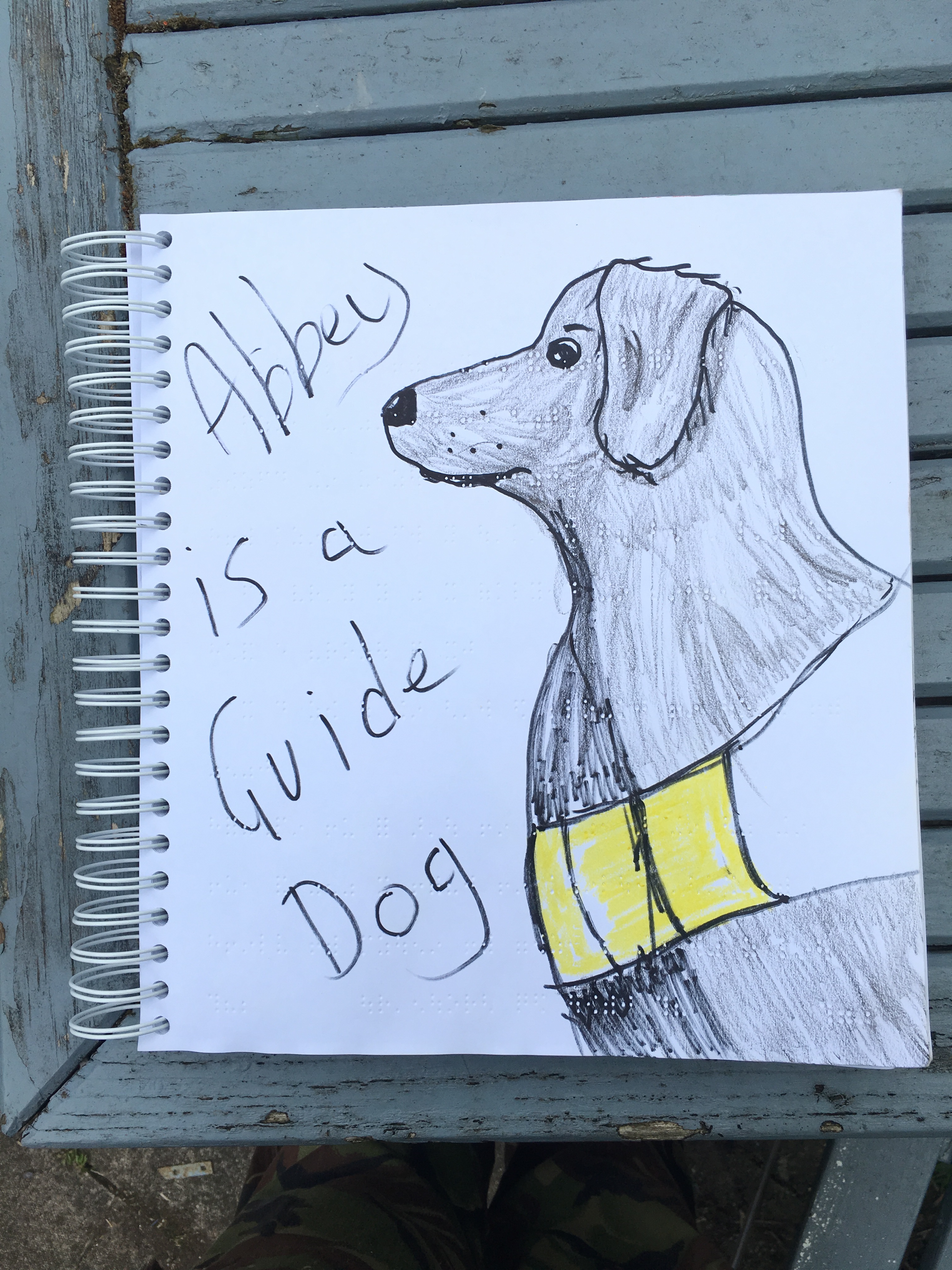
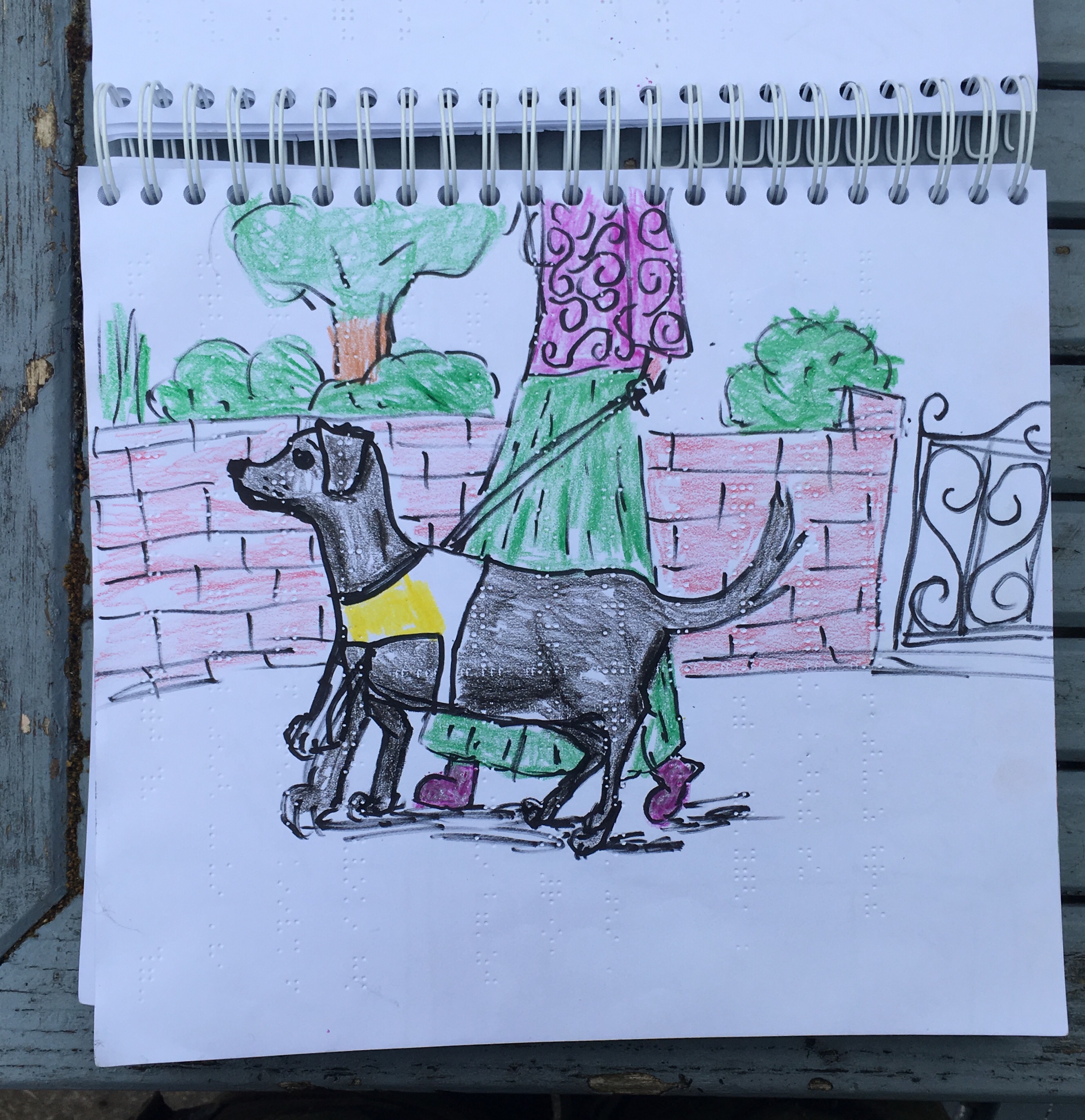
My initial thought was to try to team up with an illustrator, but that seemed like a massive hassle and, after all, this whole independent publishing thing was just an idea which may come to nothing. I dug out a thick pen and some old Braille paper and tried to sketch a guide dog for one of the books….

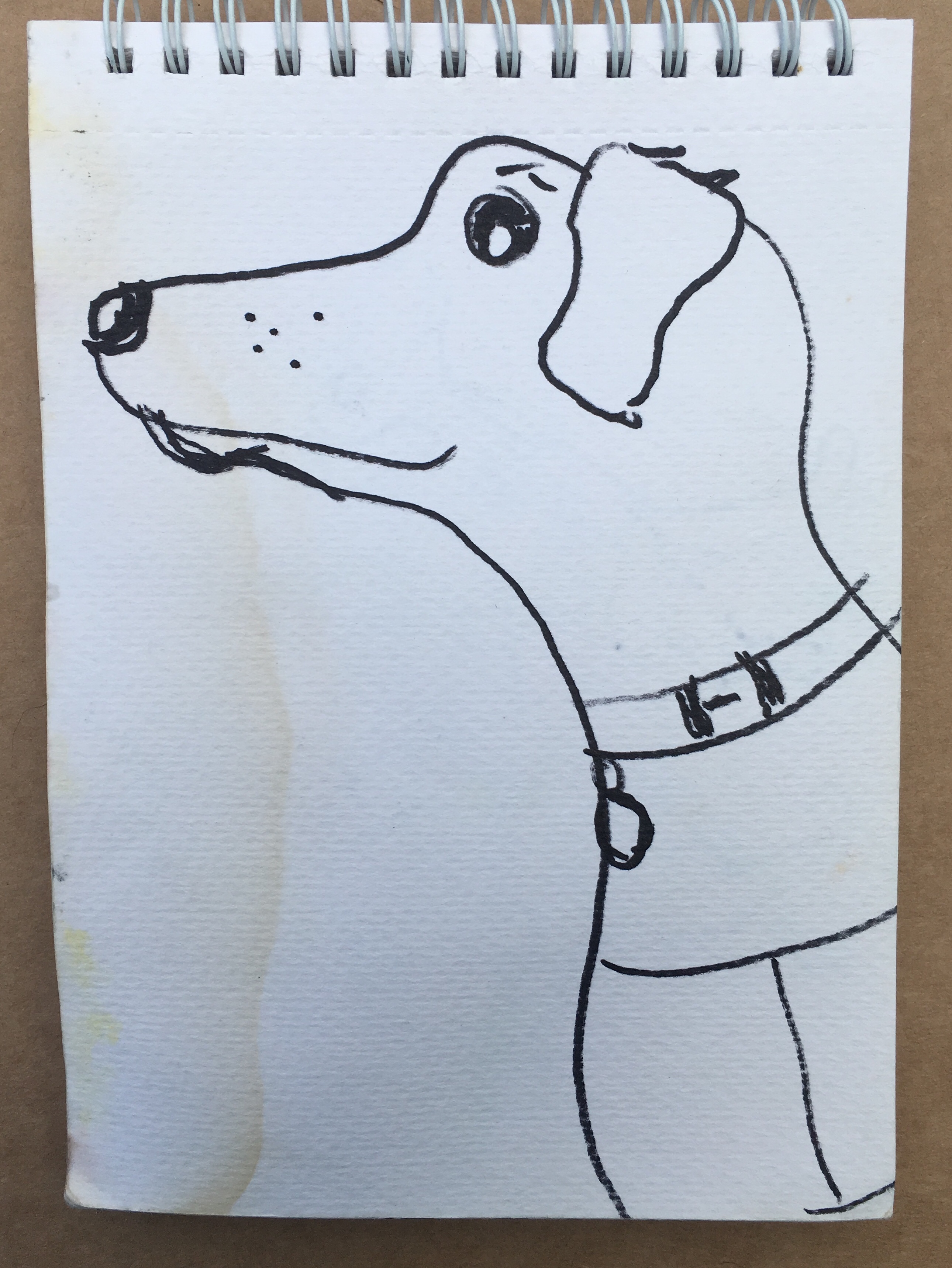
I turned out something which I, and more importantly my small grandson, thought was cute. I salvaged some old water damaged sketchbooks and tried a few more…..

And then I hit YouTube again, searching for tutorials on drawing cartoon dogs. I’m aware that I’ll need to achieve consistency for the books, and I need to be a lot confident that I know what I’m doing. I tried a few more cartoons relating to other Characters in the books, but everything seems so flat.

So far everything was produced using a thick felt tip pen and some wax crayons. I realised I need to know a lot more about perspective, shading, colour blending and choices, and the list goes on and on.

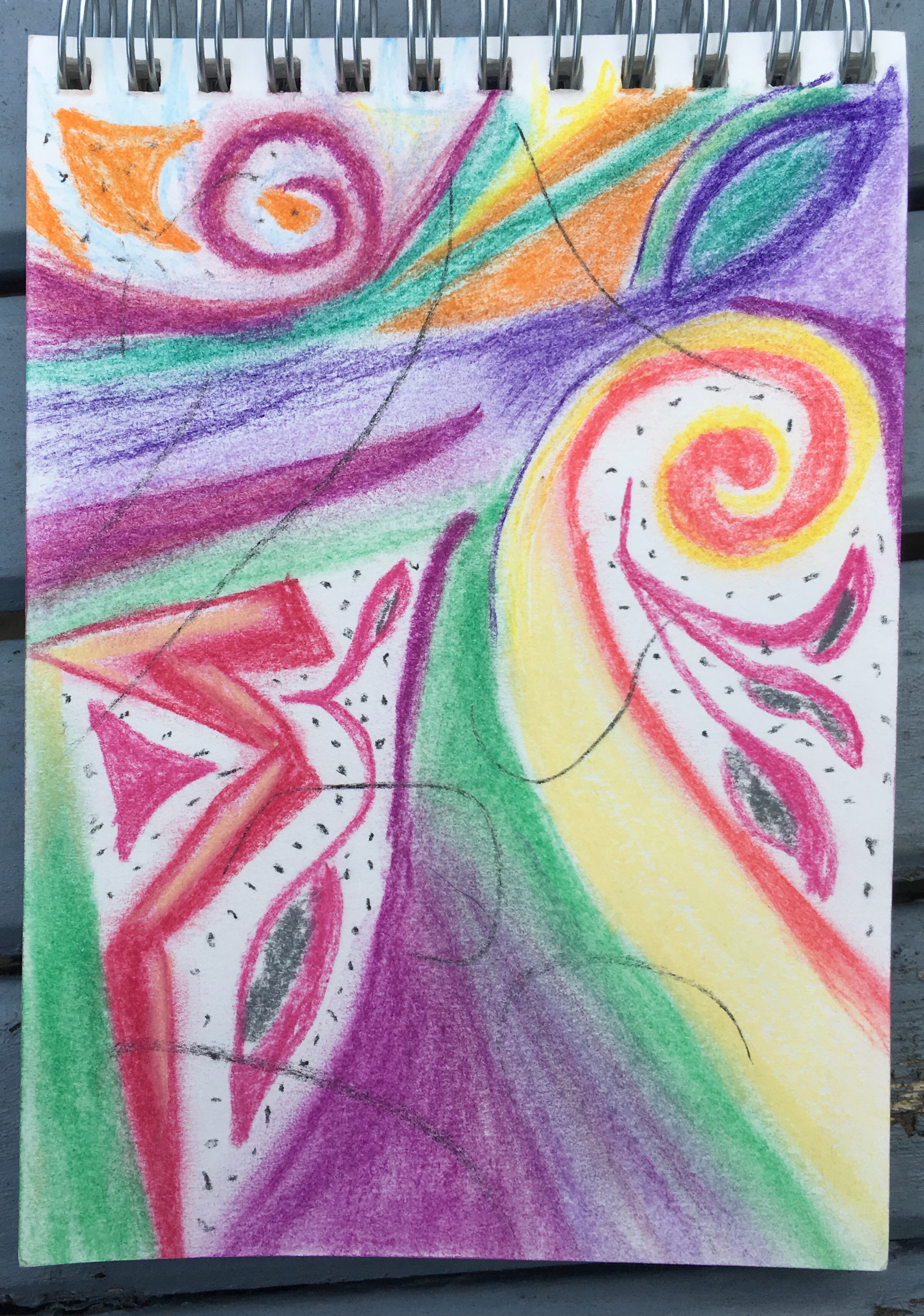
Back to YouTube where one click lead to another and I found some great stuff with abstract artists in Australia. I was fired up by those singing colours, so I dug out some pastels to play with and took some inspiration from Ken Done and others, learning learning with every stroke.

I really did try to keep away from anything involving pencils, but I just couldn’t resist those wonderful Proko drawing tutorials. And then, of course, I had to have a go. I dug out all my old sketching materials and got stuck in.

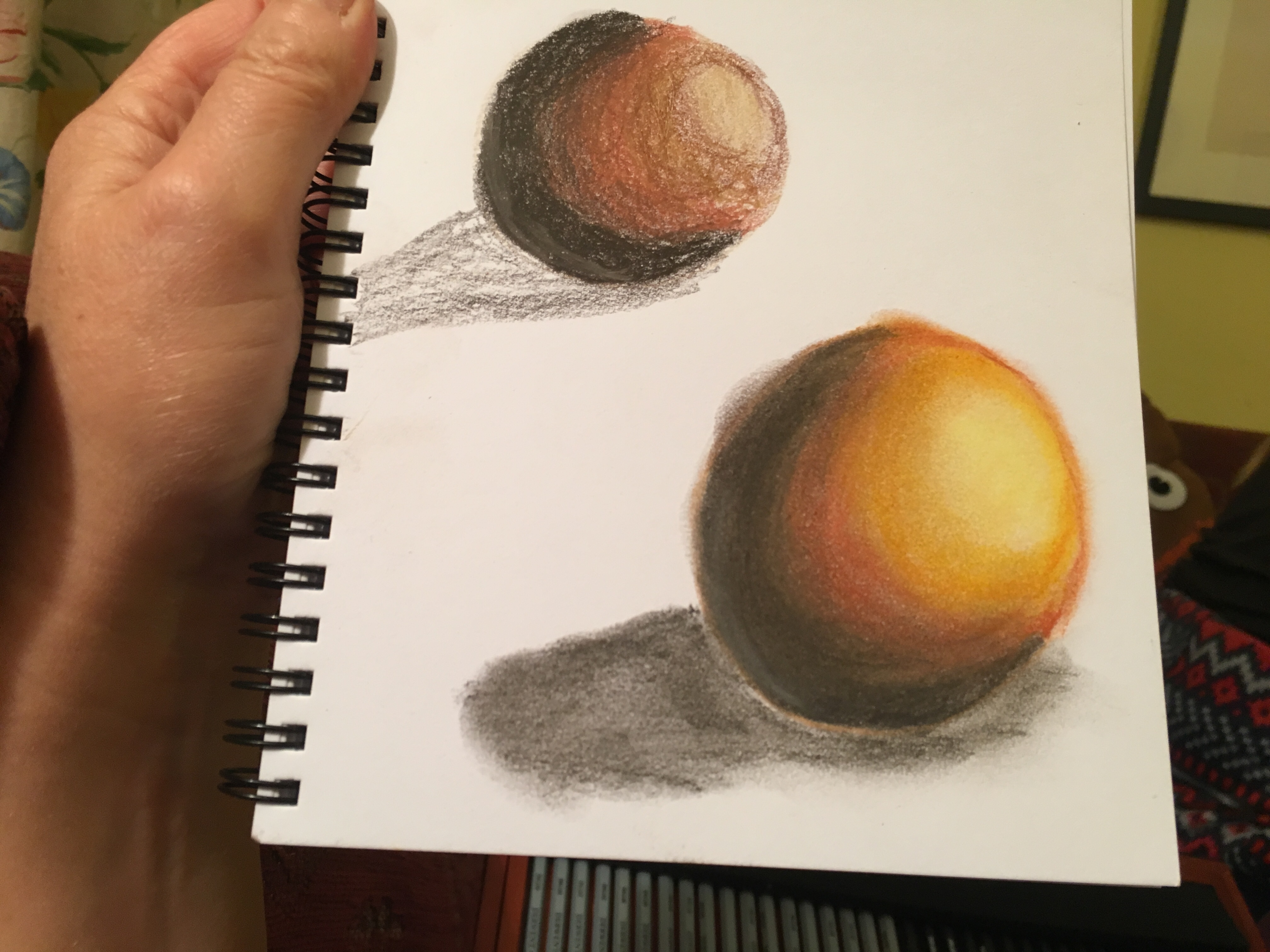
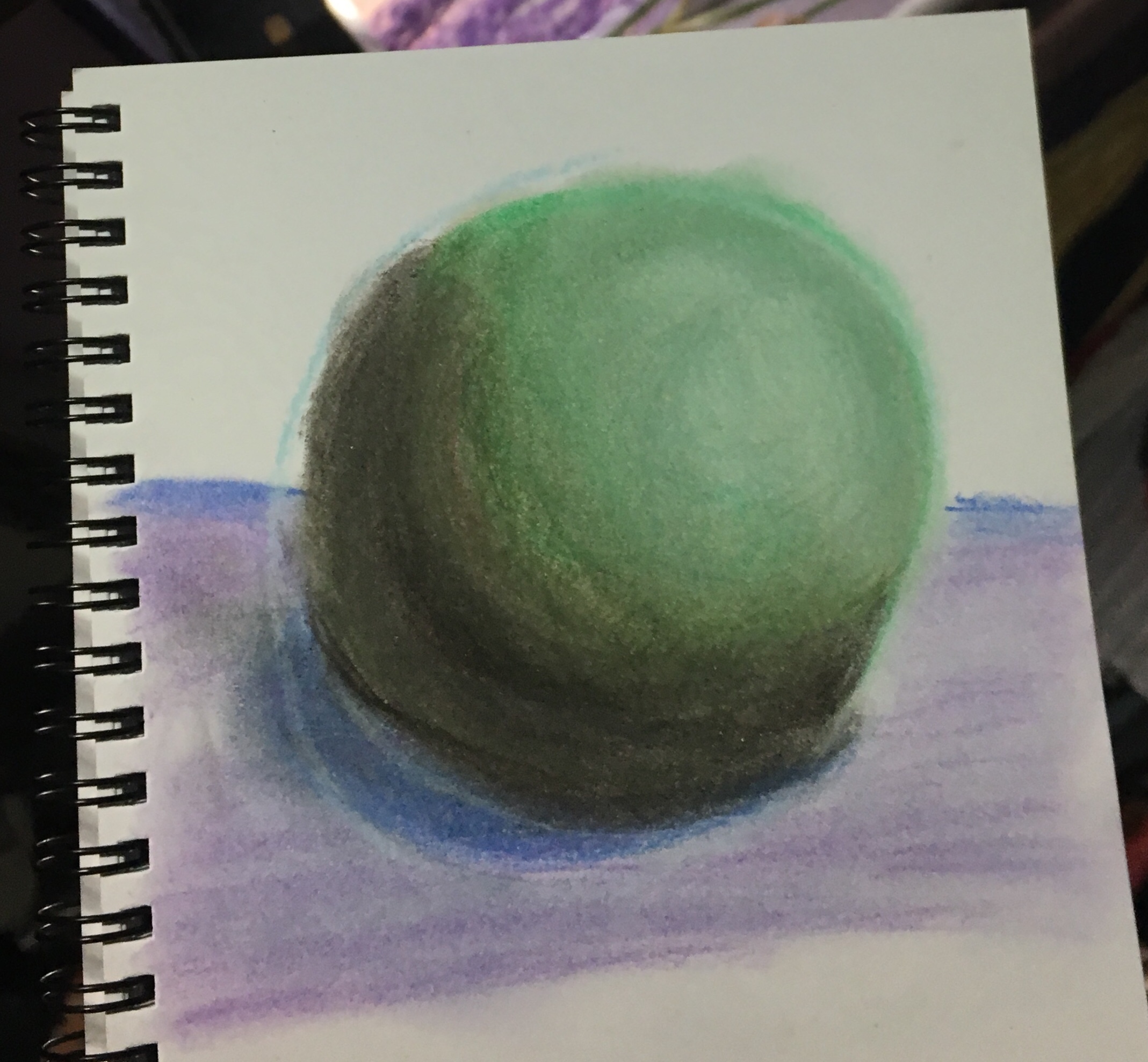
I had some drawings I was feeling pretty good about, but I was really nervous about using colour and shading. I’d never even heard of values and tone and cast-shadows before all this. So I decided to work on some basic exercises to see if I could cope with the whole colour and form thing. And that’s when I really surprised myself.

I found that, using pastel pencils, I can build up a little form. I learned so much just doing these few little exercises. I took the plunge and added some colour to one of those drawings, and even shared it publicly. This was a huge step for me and I was ready to be disheartened by the response. People liked it.

I’ve raced through the story of the first three weeks also of my affair with a sketch pad. And I have hardly told you anything about how all this can possibly work with someone who is registered blind. I have so much more to share with you and in the coming posts I will talk about what I have learned playing with shading and texture – light and shadow, and then perspective – reaching towards a sense of realism, trying to make things appear heavy or distant. The whole thing has become utterly absorbing. And some of the weird stuff coming out is quite a surprise to me. It seems there are places I go when drawing which I never visit when writing. I look forward to sharing more of my discoveries with you soon, and letting you in on some of the secrets of drawing with broken eyes.

I’m having to be very disciplined to ensure that the writing still gets done, but I am increasingly confident that this blind woman will be illustrating her own books before too long.